



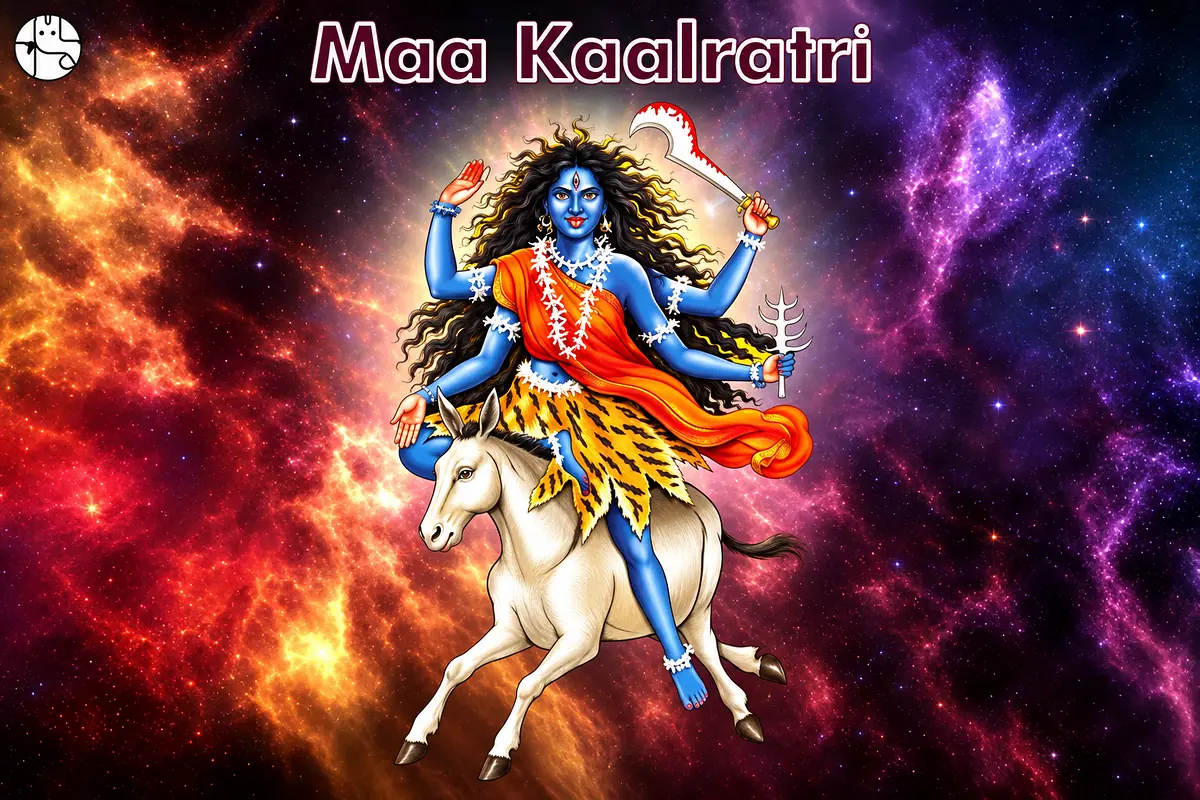
Maa Kaalratri is the seventh form of Goddess Durga, worshipped on Day 7 of Navratri, Saturday, 17 October 2026. Her name combines Kaal (time) and Ratri (night). Dark-complexioned and riding a donkey, she destroys fear, ignorance and evil. Despite her fierce form, she is also called Shubhankari, the one who brings auspiciousness. Her mantra is “Om Devi Kalaratryai Namah.”
Maa Kaalratri is worshipped on the seventh day of Navratri and is regarded as one of the most powerful forms of Goddess Durga. She destroys ignorance, fear and negative forces while protecting her devotees with courage and strength. Although her appearance is fierce, she is also known as Shubhankari, the one who brings auspiciousness. In 2026, Maa Kaalratri will be worshipped on Saturday, October 17, during Sharad Navratri.
Who Is Maa Kaalratri?
Maa Kaalratri is the seventh form of Goddess Durga. Her name combines Kaal, associated with time and death, and Ratri, meaning night. Her dark complexion and fierce appearance symbolise her power to confront and destroy evil.
She is depicted with four hands and rides a donkey. Her right hands are shown in the Abhaya Mudra, which represents protection from fear, and the Varada Mudra, which signifies blessings. In her left hands, she holds a sword and an iron hook. Her three eyes are described as radiant, and flames are traditionally depicted emerging from her nostrils.
7th Day of Navratri 2026 | Important Dates & Timings
| Navratri Day 7 Details | 2026 |
|---|---|
| Kalratri Devi Puja Date | Saturday, October 17, 2026 (Maha Saptami) |
| Saptami Tithi Begins | 05:55 AM on Oct 17, 2026 |
| Saptami Tithi Ends | 08:29 AM on Oct 18, 2026 |
| Sunrise | 06:23 AM |
| Sunset | 05:50 PM |
| Colour of the Day | Grey |
| Chakra | Sahasrara Chakra |
Are You Facing any Problems in Life? So, this is the right time to Connect with our Astrologer on Chat and remove your obstacles. First Chat Free!
Significance of Maa Kaalratri on Navratri Day 7
Maa Kaalratri embodies the courage needed to face life’s hardest phases. In her furious posture, Maa Kaalratri exemplifies to the worshippers the necessity to confront fear, ignorance and negativity rather than avoiding them. For her devotees, she is a caring and loving mother who encourages her devotees.
According to common beliefs, Maa Kaalratri is related to Saturn (Shani). The worshippers pray to her to get strength, peace and fortitude to face difficult situations bravely.
The Legend of Maa Kaalratri
As per the tradition of Hindus, Maa Kaalratri symbolises the fearsome ability of the Goddess to eradicate the evil forces and maintain balance. In one episode, Goddess Parvati takes this dark and formidable form to defeat the demons Shumbha and Nishumbha.
Though she looks frightening, Maa Kaalratri is known to be an auspicious being for those people worshipping her faithfully. The name Shubhankari represents this kind part of her character since, being the goddess combating darkness, she takes care of her worshippers and restores peace on the Earth.
Maa Kaalratri Puja Vidhi
Devotees can worship Maa Kaalratri at home by following these simple steps:
- Clean the puja area and place the Goddess’s idol or picture on a raised platform.
- Offer flowers, incense, fruits and jaggery (gur) as bhog, along with other traditional puja items according to family customs.
- Chant Maa Kaalratri’s mantra, offer prayers and conclude the puja with aarti. Prasad can then be distributed among family members.
Maa Kaalratri Mantra and Meaning
Devotees may chant this mantra to offer their prayers to Maa Kaalratri:
ॐ देवी कालरात्र्यै नमः॥
Transliteration: Om Devi Kalaratryai Namah.
Meaning: Salutations to Goddess Kaalratri.
Maa Kaalratri Dhyana Mantra
The following traditional verse describes the Goddess’s fierce appearance:
एकवेणी जपाकर्णपूरा नग्ना खरास्थिता।
लम्बोष्ठी कर्णिकाकर्णी तैलाभ्यक्तशरीरिणी॥
वामपादोल्लसल्लोहलताकण्टकभूषणा।
वर्धनमूर्धध्वजा कृष्णा कालरात्रिर्भयङ्करी॥
Transliteration:
Ekaveni Japakarnapura Nagna Kharasthita,
Lamboshthi Karnikakarni Tailabhyakta Sharirini.
Vamapadollasalloha Latakantakabhushana,
Vardhana Murdhadhwaja Krishna Kalaratrir Bhayankari.
Meaning: This verse portrays Maa Kaalratri as possessing a single hairstyle, unique ear decorations, and a fierce and dark shape that rides on a donkey. It also describes her body anointed with oil and her left foot adorned with a thorned iron ornament. Hence, the verse calls up the powerful Goddess who faces fear and crushes evil.
Will 2027 be a year of strength or stress? Get Your Detailed Report Now!
Why Do Devotees Worship Maa Kaalratri?
The followers worship Maa Kaalratri for the power to stand up against difficulties to gain security and protection. Her terrible form also gives a lesson that facing the unpleasant realities can be essential for personal and spiritual elevation.
The seventh day of Navratri is connected with prayer as well as reflection on the Sahasrara Chakra, known as the crown centre of energy, according to certain spiritual traditions. The worshippers are able to spend this day practicing meditation, reaching inner consciousness, and praying for the graces of the Goddess.
This Navratri, you can also perform Maa Kaalratri’s worship with the help of Navratri puja services by GaneshaSpeaks.
FAQs
When is Maa Kaalratri worshipped during Navratri 2026?
Maa Kaalratri is worshipped on the 7th day of Navratri, which falls on Saturday, October 17, 2026.
What is the significance of Maa Kaalratri in Navratri?
Maa Kaalratri, the 7th Avatar of Maa Durga, is known for destroying ignorance and bringing light into darkness. She represents the death of time and provides calmness and courage to her devotees.
What are the characteristics of Maa Kaalratri?
Maa Kaalratri has a dark complexion and rides a donkey. She has bountiful hair, four hands, and three eyes that emit rays like lightning. Her necklace shines like thunder, and flames appear through her nostrils when she breathes.
What is the auspicious color to wear on the 7th day of Navratri?
The auspicious color to wear on the 7th day of Navratri is Grey.
What does Maa Kaalratri teach her devotees?
Maa Kaalratri teaches that sorrow, pain, decay, destruction, and death are inevitable truths of life. Accepting their presence is essential to realizing the fullness of our being and potential.